
Online poker moves quickly. For many players the number of decisions they make each hour eclipses the rhythms of older forms of the game.
Where a live poker table deals perhaps 25 to 30 hands every sixty minutes, a standard online table will see players through 60 to 90 hands in the same span.
Fast-fold and “Zoom”-style games accelerate this further to about 200 to 250 hands an hour.
This matters because poker is a game of choices. Every deal represents a moment to gather information, to calculate odds, to assess value and to make a decision that tilts the long-term scales in your favour. Volume creates insight.
Volume exposes patterns. Volume rewards both mathematical fluency and psychological intuition.
What the numbers show suggests a profound shift in how success is measured in online play. Professional grinders talk about “hands per hour” the way marathon runners talk about splits.
The more hands you see, the more opportunities you have to compound skill into long-term edge.
When you see 200 hands in the time it would take live players to see 30, the feedback loop between decision and result intensifies.
Playing many tables and many games
Across the online lobby you will find a kaleidoscope of variations on poker and its cousins. In the same space where people click into a fast-fold Hold’em ring, others explore tournament ladders, cash pools and even hybrid offerings.
You might jump to a table that runs six players, then to one that offers progressive knockout side games or blend into casino games such as roulette, slots and blackjack between sessions.
The choice of pace, format and mental rhythm really becomes part of the experience.
Some players come for the tactical dance of no-limit Texas Hold’em. Others float between games built around speed and signal, relishing how fast play lets them explore strategies across formats.
The line between poker and broader gambling culture blurs when technology compresses waiting time into action.
Why more hands per hour change how you think
When you accumulate decisions at an inflated rate your brain adapts. You start to recognise patterns without ruminating.
Your sense of risk adjusts to a stream of small, repeated choices rather than the ponderous, discrete amusements of face-to-face tables.
Studies of timing signals in online play suggest even the duration of a click carries information.
Players who act quickly in raise-first-in situations often hold stronger ranges than those who hesitate because they are weighing parts of their hand.
This presents a paradox. Speed creates clarity through repetition, but it also demands a discipline of focus that far surpasses slower styles of play.
On one hand the rapid motion compresses variance. On the other hand it compresses errors.
Every mistake that may have been smoothed over by the rhythm of live play can reappear like static in the torrent of hands online.
For players who adjust, speed becomes an ally.
They refine preflop ranges, learn to widen their starting hand selections when position is favourable, and tighten when it is unfavourable.
They see riffs of behaviour repeated in seconds rather than hours and capitalise on those echoes of pattern and rhythm.
How speed alters strategic priorities
Traditional poker teachings emphasise patience, selective aggression and reading your opponents. These lessons carry across formats, but speed adds new dimensions.
In a fast-fold pool, you will never sit with the same opponents for long. Reads built on observing long-term betting patterns dissolve.
Instead timing tells, bet sizing and statistical tendencies become your companions.
For example, knowing that fast tables deal three to five times more hands than a typical live table means you must adjust what constitutes good play.
A marginal hand that is playable in a slow, observational context may lose value when the tempo demands you rebalance aggression and fold equity more sharply.
Speed also changes how multi-tabling affects strategy. When managing two or three tables the cognitive load remains approachable.
At six, nine or more, players begin to lean on pattern recognition and simplified heuristics rather than deep individual reads.
This has become an identifiable game style in its own right, where players build muscle memory for decision templates that work reliably at scale.
Learning faster means adapting faster
One of the silent revolutions in online poker is how quickly players can improve through sheer exposure.
A novice playing online may see tens of thousands of hands in a handful of sessions. A live player might see the same volume in months.
This accelerated exposure creates learning loops, where players test hypotheses, see outcomes and refine strategy with a rapidity that older generations of players never experienced.
The implication for culture and competition is profound. Skill curves steepen.
Meta-strategies evolve fast. What worked last year in a standard six-max ring could be suboptimal today in a fast-fold pool.
Players who excel in one tempo often find themselves relearning when they change formats.
Timing tells and digital signals
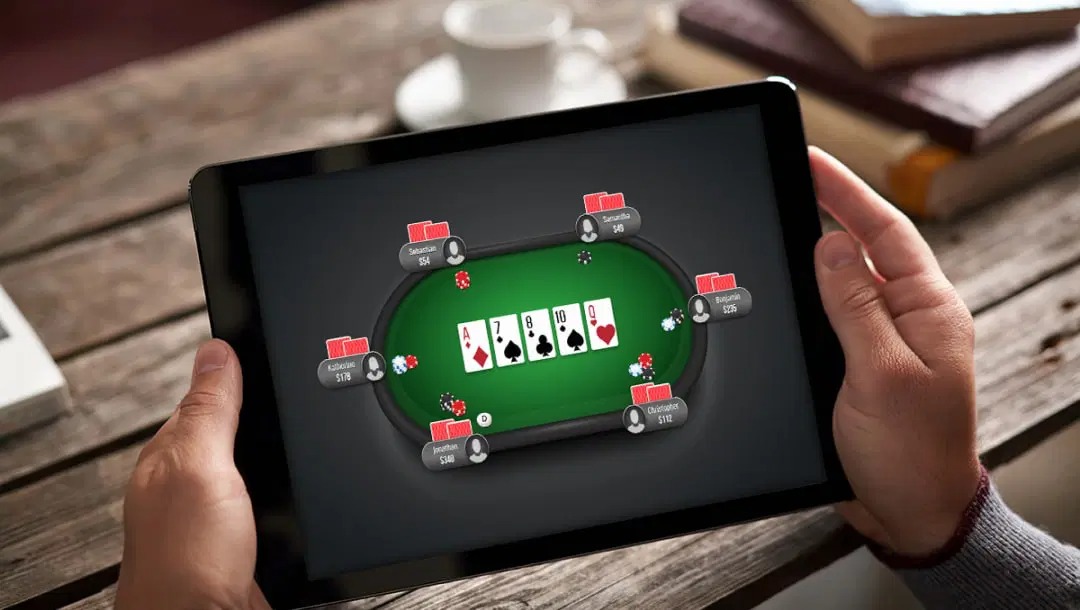
In the absence of physical cues online, timing takes on a new life. A player who clicks instantaneously may signal confidence or routine.
Another who pauses might reveal uncertainty or strategic depth.
Online timing tells have been studied and shown to correlate with strength in certain contexts, particularly around three-bet and four-bet situations.
This elevates a new kind of psychological interplay. You are reading the space between the hands as much as the cards themselves.
You learn to sense when a player’s timing telegraphs certainty and when it reflects indecision. This adds a subtle texture to play that evolves with the speed of hands.
Cultural dynamics of fast play
As online poker has accelerated, it has attracted a diverse cohort of players.
Some seek grind and long sessions. Others want quick engagements that fit between errands or commutes.
The pace accommodates both. A day’s session might include a grinding rhythm of focused, analytical play interspersed with bursts of fast-fold cadence when the mood shifts.
This rhythm reflects broader trends in digital culture, where instantaneous feedback loops and rapid consumption shape expectations.
Poker once existed merely as a slow, ritualised card game, but now adapts to screens, to mobile play, to bursts of attention and reward.